01132026Tue
Last updateSun, 04 Feb 2024 4am

Saudi Sadara, Solvay start construction of hydrogen peroxide plant

Saudi Hydrogen Peroxide Co., a new company created by Brussels-based chemicals company Solvay SA (SOLB.BT) and Sadara Chemical, said Monday they have started constructing one of the world's largest hydrogen peroxide plants in Jubail on the Gulf coast.

The plant, the first of its kind in the kingdom and the third joint venture for Solvay, will have a capacity of more than 300,000 metric tons per year when it starts production in 2015.

Sadara, the $19.3 billion petrochemical joint venture between state oil giant Saudi Aramco and Dow Chemical Co. (DOW), will use output from the plant as a raw material for the hydrogen peroxide-to-propylene oxide manufacturing plant in its mega complex in Jubail Industrial City II.

The unit will also support Sadara's propylene oxide derivative units that produce polyols and propylene glycol. The Sadara complex, one of the world's largest chemicals plants, is expected to produce more than 3 million tons of petrochemicals a year once it is completed in 2016.

Saudi Arabia is pouring billions of dollars into developing its petrochemical industry to add value to its vast hydrocarbon resources and create jobs for its young and growing population.

The Sadara project represents Aramco's second major investment in a large-scale petrochemical complex in the kingdom. It is already involved in a joint venture with Sumitomo Chemical Co. (4005.TO) in Rabigh on the Red Sea.

Air Jordan 1
Technip awarded contract for the development of the Umm Lulu field in Abu Dhabi

Technip, in a consortium led by National Petroleum Construction Company (NPCC), has been awarded by Abu Dhabi Marine Operating Company (ADMA-OPCO) the contract for the engineering, procurement and construction (EPC) work of Umm Lulu Full Field Development project – Package 2 (Process Facilities).
The contract, with an approximate value of US dollars 1.69 billion (Technip share: about 35%), was awarded at the conclusion of a competitive bidding process in which a number of EPC contractors participated.

The contract’s scope of work consists of the detailed engineering, procurement, fabrication, offshore installation, commissioning and start-up of a large offshore super complex comprising of six bridge linked platforms including gathering, separation, gas treatment and water disposal facilities, utilities and accommodation modules, totaling over 66,000 metric tons (with associated jackets, flares, bridges and subsea composite cables). The platforms will be installed by the floatover method developed by Technip, which allows a high proportion of the hook-up and pre-commissioning work to be completed onshore prior to load-out, and thereby significantly reduces both the duration and cost of the offshore commissioning phase.

Technip will be responsible for the engineering of the project and will share the procurement and commissioning works with NPCC. NPCC will be responsible for the fabrication and installation of the facilities. The project is scheduled to be completed in the first half of 2018.

Adidas

Linde Group to build the world's largest CO2 purification and liquefaction plant for SABIC

The United Jubail Petrochemical Company (United), a manufacturing affiliate of the Saudi Basic Industries Corporation (SABIC), has awarded the engineering, procurement and construction contract for its carbon dioxide utilization project to Germany's The Linde Group to build the world's largest CO2 purification and liquefaction plant.
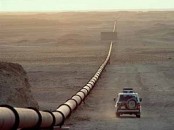
The plant will be designed to compress and purify about 1,500 tons per day of raw carbon dioxide coming from ethylene glycol plants. The purified gaseous CO2 will be supplied through pipes to three SABIC-affiliated companies for enhanced methanol and urea production. Methanol is a basic commodity for the chemical industry, and urea is used for fertilizer production. An estimated 500,000 tons of CO2 emissions will be saved each year.

Yousef Al-Zamel, SABIC Executive Vice President, Chemicals Strategic Business Unit, said "the project will contribute significantly to SABIC's growth strategy. It will add to SABIC's business portfolio of industrial gas products. This is the first of many other similar projects to be executed next year."

The plant will also be capable of producing 200 tons per day of liquid CO2 with food grade quality which will be stored and thereafter supplied by truck to the beverage and food industry. It is the first carbon capture and utilization (CCU) project to be realized in Saudi Arabia. The reduction of CO2 emissions is an important aim in SABIC's sustainability strategy.

Browse All Brands

Oman signs $60bn deal to import Iranian gas

Iran has signed a memorandum of understanding (MoU) on Monday to export gas to Oman from 2015, in a 25-year deal valued at around $60 billion, Iran's energy ministry news service said on Tuesday.  Energy-hungry Oman agreed to buy gas from Iran as far back as 2005 and a later draft deal in 2007 included plans for Oman to process Iranian gas for export as liquefied natural gas (LNG).

But the two sides have never finalised terms and Oman has been pressured by the United States to source fuel from alternative suppliers such as Qatar, according to US embassy cables released by Wikileaks.

Oman, which has warmer relations with Iran than other Arabian Peninsula countries, began importing Qatari gas in 2007, but its demand has risen rapidly since, threatening its LNG exports and pushing Muscat back to the negotiating table with Tehran. The latest MoU signed by new Iranian energy minister Bijan Zanganeh and his Omani counterpart Mohammed bin Hamad Al Rumhy, includes an agreement to start laying a gas pipeline to Oman as soon as possible, oil ministry news service Shana reported.

"We can start implementation of the project; mainly because top executives of the two countries insist that the project should be implemented as soon as possible," Shana quoted Zanganeh as saying after the signing ceremony held on Monday during a visit to Tehran by Oman ruler Sultan Qaboos.

Iran sits on the world's largest gas reserves, according to the latest statistics compiled by BP, but it has been prevented from exporting much of it because of western sanctions that have slammed the brakes on its LNG export ambitions.

Oman has plants able to produce up to 10.4 million tonnes of LNG a year but has not produced more than 8.8 million in the last five years and output fell to 8.4 million in 2012, according to Oman LNG's latest annual report.

According to a working copy of the 2007 agreement between the two countries, in addition to imports of 1 billion cubic feet per day (bcfd) of gas from Iran for domestic use, Oman would allocate 2 million metric tons per year in excess capacity at its Oman LNG plant to process Iranian gas for export. The copy of that agreement was obtained by the US embassy in Muscat according to 2007 cable leaked to Wikileaks.

It is very unlikely that the big European shareholders - Shell and Total - would agree to liquefy Iranian gas while EU sanctions on Iran are in place, but Iranian gas imported for domestic use could free up more Omani fuel to feed Oman's existing LNG export facilities.

In addition to sanctions pressure, US ally Oman's enthusiasm for building the pipeline with Iran may depend on whether it can agree terms for BP to develop the Kazzan tight gas project, which could supply around 1 billion cubic feet per day by 2018.

(By Reuters)

New Nike Air Max 2019

Jordan approves USD980m water project

AMMAN--Water scarce Jordan approved Monday a $980 million project to desalinate water from the Red Sea for drinking water needs, which at the same time would help to replenish the retreating Dead Sea.  The desalination plant will have a capacity of 100 million cubic meters a year in Wadi Araba, Prime Minister Abdullah Ensour told reporters, and a pipeline from the plant will discharge the brine into the Dead Sea.

Jordan is one of the world's most water-poor nations, suffering chronic drinking water shortages. And the Dead Sea is shrinking around one meter every year amid drought, and pumping for mineral extraction and agricultural needs.

"The Jordanian government has decided to go ahead with the project after conducting thorough geological, geographical, environmental and economic studies," Mr. Ensour said.

Jordan would also swap desalinated water produced by the project with drinking water produced by Israel from Lake Tiberias--known as Sea of Galilee--north of the Jewish state.  Mr. Ensour said that Jordan would buy drinking water from Israel produced from Tiberias and sell Israel instead desalinated water produced from the new project in the south in order that the kingdom reduces costs of transporting water from the south to north.

The project will be financed partially by the government, while between $300 million and $400 million would be secured from grants, the Minister of Water and Irrigation Hazem Nasser said in a statement Sunday following a cabinet meeting.  Last month Jordan inaugurated the $1 billion water supply project transporting around 120,000 cubic meters a day from the Disi aquifer in southern Jordan to the capital Amman and nearby provinces.

Nike Shox Deliver